










This evidence-led guide — this page provides an evidence-led overview of why some people search for casinos that are not registered with GAMSTOP, what that means for consumer protections in Great Britain, and what risks and safety steps to consider. This page does not advise anyone to bypass self-exclusion. GAMSTOP covers online gambling businesses licensed to operate in Great Britain; being outside GAMSTOP or holding a foreign licence is not equivalent to authorisation by the UK Gambling Commission (UKGC) and does not provide UK consumer protection. If you have an active self-exclusion registration or are experiencing gambling harms, do not use this page to find another place to gamble. Instead follow the support-first guidance below and consider contacting professional services.
Advertising and commercial disclosure: this site may feature advertising and affiliate links on other pages. Advertising links are labelled as such and the site may earn commission if you click them. Any mention of commercial features here is intended for factual context only and does not change the evidence standard applied in this article. No part of this page should be used as encouragement to resume gambling after self-exclusion.
Why people use this search term
Searches for phrases such as “advantages of playing in casinos not on Gamstop” typically reflect one or more motivations: curiosity about product features, perceived differences in available games or payment methods, or a desire for different account or promotional terms. For some users the interest is purely informational; for others it can be related to attempting to regain access after self-exclusion. Understanding the mix of motivations is important because it changes which facts are relevant and which risks matter most.
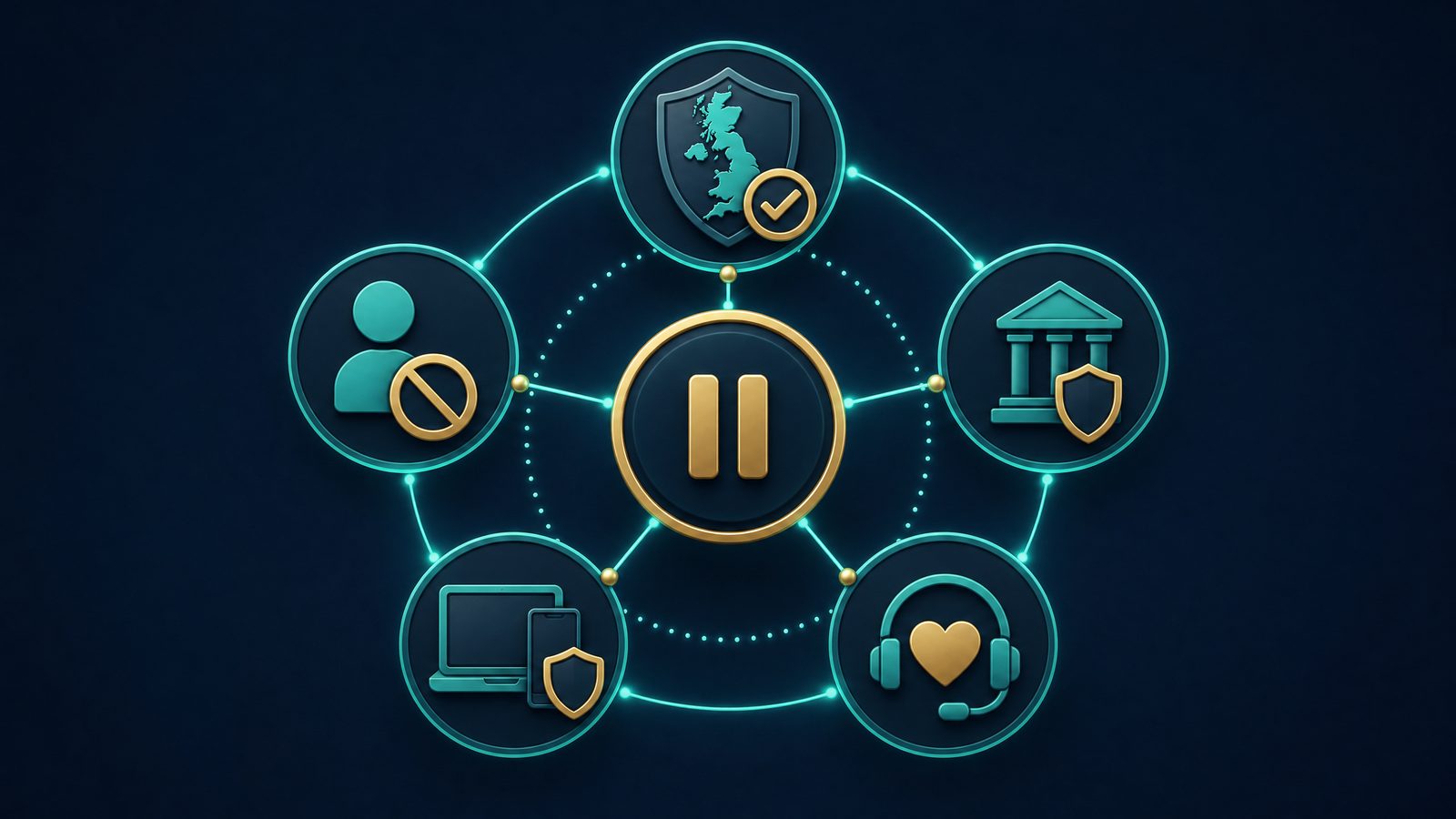
Common, legitimate reasons people research non‑GAMSTOP operators include:
- Wanting a plain factual comparison of regulatory coverage and consumer protections.
- Researching payment methods, verification or account policies for international operators.
- Comparing technical features such as game selection or software providers for hobby purposes.
However, searches can also be associated with attempts to regain access after self‑exclusion or to avoid UK protections. If that applies to you, the correct response is support and treatment, not a change of operator. This article emphasises safety, regulatory facts and support options rather than promotional content.
GAMSTOP, UKGC licensing and consumer protections
GAMSTOP is an independent self‑exclusion scheme for players who use online gambling services licensed in Great Britain. It is designed so that people who register are prevented from opening or using accounts with operators that are within GAMSTOP’s scope. For an official description see GAMSTOP’s own guidance: About GAMSTOP.
The UK Gambling Commission (UKGC) is the regulator for gambling in Great Britain. UKGC licensing carries specific legal obligations for operators, including rules on customer due diligence, anti‑money‑laundering, safer gambling measures, complaints processes and dispute resolution. GAMSTOP applies to operators licensed in Great Britain, but being outside GAMSTOP does not mean an operator is licensed by the UKGC. The UKGC maintains a public register of businesses it licences: UKGC public register.
Key practical differences to understand:
- Scope: GAMSTOP covers operators licensed to offer services to Great Britain that voluntarily participate or are within the scheme’s remit. A foreign licence does not equal UKGC authorisation.
- Consumer protections: UKGC licence conditions impose standards and enforcement powers in law. Sites outside UKGC supervision may not be subject to these conditions and you may have fewer formal recourses in disputes.
- Self‑exclusion enforcement: if you self‑exclude via GAMSTOP, that registration will prevent participation at participating UK‑licensed sites. Self‑exclusion remains the recommended route for those wanting to stop gambling, not switching operators.
The UKGC has published research and monitoring on the unlicensed market; for further reading see their unlicensed gambling research: UKGC unlicensed gambling research.
Claims commonly presented as advantages: questions to ask
Many promotional pages present a set of claimed “advantages” for being outside GAMSTOP. Below is a checklist of claims often encountered and the factual questions you should ask to evaluate them. This list is intended to help readers judge evidence rather than to recommend use.
Typical claim: broader game selection or software providers
Questions to ask:
- Is the catalogue described with verifiable, non‑promotional data (for example, a provider list that can be checked on the operator’s site)?
- Does the operator publish a return‑to‑player (RTP) document for specific games or is RTP quoted only as a general figure? Remember RTP is a theoretical long‑run percentage for a specific game configuration and not a promise about short sessions.
Typical claim: more payment options or faster withdrawals
Questions to ask:
- Which payment methods are supported and which are available to residents of Great Britain?
- Are processing times published and backed by independent evidence or customer complaint records?
- Do the terms explain identification checks, withdrawal limits and potential fees?
Typical claim: “fewer restrictions” or “no KYC”
Questions to ask and caveats:
- Any suggestion that KYC or affordability checks can be skipped should be treated as a red flag. Reputable, licensed operators are required to perform checks to prevent fraud and protect consumers.
- Operators outside UKGC supervision may advertise lighter checks, but lighter checks increase risk for the player and do not provide UK legal protections.
Typical claim: promotional generosity
Questions to ask:
- Are promotional terms and wagering conditions fully published and clear about withdrawal eligibility?
- Has the site’s advertising been reviewed by an impartial regulator or complaints body? ASA guidance on affiliate marketing and gambling advertising is relevant: ASA affiliate-marketing guidance and the CAP Code section on gambling: ASA/CAP gambling rules.
In every case, promotional claims require documented terms, screenshots or regulatory statements to be credible. Absence of transparent evidence is a reason for caution.
Risks of treating self-exclusion as a restriction to avoid
For people who have registered with GAMSTOP or who are concerned about gambling harms, switching to a different operator to regain access is not a safe or recommended solution. There are practical and clinical reasons for this.
- Self‑exclusion is a support measure. Circumventing it by using alternate sites undermines the purpose of treatment and makes it harder to monitor recovery.
- Operators outside UKGC supervision may not offer the same safer‑gambling tools, deposit‑limiting features, or mandatory affordability checks. If a site offers fewer safeguards, that increases the risk of further harm.
- Using sites not subject to UK law may reduce avenues for formal dispute resolution or restitution if something goes wrong (for example, unfair account closure or non‑payment disputes).
Clinically, relapse after self‑exclusion is a sign that more support is needed, not that a different operator is a suitable workaround. If you or someone you care about is struggling, contact a support organisation rather than attempting to find a different operator.
Safer ways to pause, limit or stop gambling
This section explains non‑commercial, practical steps to reduce gambling harm. These are alternatives to searching for operators outside GAMSTOP and are appropriate for those seeking to pause or stop gambling activity.
Use GAMSTOP and other self-exclusion tools
GAMSTOP is intended to block access to participating online gambling services licensed in Great Britain. If you want to exclude yourself from GB‑licensed websites and apps, register with GAMSTOP. It is free and designed for people who need a certified break from gambling: GAMSTOP about page.
Bank and card controls
Many banks in Great Britain offer gambling blocks or card controls that let you restrict payments to merchant categories associated with gambling. Contact your bank to ask about their available support options including gambling transaction blocking. Banks can also help with dispute processes if unauthorised transactions occur.
Device and content blockers (supportive, not foolproof)
Consumer‑facing blocking software and apps can be used as an additional layer to help avoid access to gambling content. These should be seen as supportive tools — they are not substitutes for formal self‑exclusion or clinical support. Do not rely on device blockers alone if you have a serious problem; combine them with professional help and social support.
Professional and peer support
If gambling is causing harm, contact a specialist organisation promptly. In Great Britain, GambleAware provides a central entry point to treatment options and resources: GambleAware get help. GamCare and local NHS services can also provide assessment, counselling and referral to treatment programmes. Peer‑led groups such as Gamblers Anonymous are another option for ongoing mutual support.
Practical money and account steps
- Consider removing saved payment methods from devices and accounts and flagging cards for gambling blocks via your bank.
- Talk to trusted friends or family and ask them to help create accountability measures (for example, giving them control of finances during a pause period).
- Use budgeting and financial‑advice services if gambling losses are affecting broader financial stability.
How to assess non‑GAMSTOP operators without encouraging play
If a reader is evaluating online operators for purely informational or research reasons (for example, to understand market differences or for academic research), the following evidence‑based checklist can be used. This is a quality‑control framework, not an endorsement.
Verification and licensing
- Check whether the operator is licensed by the UKGC using the public register: UKGC public register. If it is not listed, it is not authorised to offer regulated services to Great Britain.
- If the operator holds a foreign licence, note which jurisdiction issued it and consult that regulator’s site for complaints and enforcement history. A foreign licence does not provide UK legal protections.
Transparency and published terms
- Are full terms and conditions easy to find and written in clear English? Check sections on account closure, withdrawal eligibility, identity verification and complaint handling.
- Does the site publish a privacy policy and explain how personal data is processed? Are AML (anti‑money‑laundering) and KYC procedures described?
Safer gambling tools and support links
- Does the site link to recognised support services (for example GAMSTOP, GamCare or GambleAware) and display age‑restriction messaging?
- Are deposit limits, time‑out or self‑exclusion options described and easy to use?
Complaints and dispute resolution
- Is there a published complaints process and a named independent adjudicator or alternative dispute resolution (ADR) provider? UKGC‑licensed operators must provide dispute escalation routes.
- For unlicensed or foreign operators, identify the applicable jurisdiction’s dispute mechanisms before relying on them.
Use the checklist above to compare factual transparency, not promotional claims. If information is missing or ambiguous, treat that as a reason for caution rather than a reason to proceed.
Support‑first resources and immediate help
If gambling is a problem for you or someone you know, seek support before taking steps to change accounts or operators. Professional services exist to help with assessment and treatment.
- GambleAware — information and links to treatment services in Great Britain: GambleAware get help.
- GamCare — advice, a helpline and live chat for people affected by gambling harms (searchable via their site).
- NHS and local health services — for clinical assessment and referral to specialist treatment where appropriate.
If you are in immediate distress or feel at risk of harming yourself, contact local emergency services or your healthcare provider immediately.
18+ Play responsibly — This information is intended for adults aged 18 and over. If you are under 18, do not attempt to access gambling services and seek guidance from responsible adults or local services.
Claims to avoid and red flags
When researching non‑GAMSTOP operators, certain claims or marketing signals should be treated as red flags rather than positive attributes. Examples include:
- Promises of bypassing verification or suggesting methods to evade self‑exclusion or banking controls. These claims are unethical, often illegal, and harmful.
- Vague or missing terms for bonus and withdrawal eligibility; lack of published wagering conditions.
- Advertising that targets people who are self‑excluded or minimises the risks of gambling harm.
- Pressure to deposit using specific payment methods that provide limited recourse or are reversible only under certain jurisdictions.
If you encounter such claims, do not proceed with registration and instead report misleading advertising to the ASA or seek help from support services.
Internal resources for further reading
For readers who want additional background on market options and consumer perspectives, see these analysis pages on the same site (informational only):
- Top 10 Non GamStop Casinos for UK Players in 2026 — a market survey and features comparison (research context).
- Why UK Players Choose Non GamStop Casinos — The Real Reasons — analysis of user motivations and common misconceptions.
- 5 Most Secure Casinos Not On Gamstop — a discussion of security attributes to look for in operator disclosures (informational only).
- Non-Gamstop Casinos: The Top 5 Payment Options Available — factual guide to payment methods often mentioned in research.
Sources and update date
This article is based on regulator guidance, industry research and recognised support organisations. Where possible, official sources have been linked directly. Key references:
- GAMSTOP — about the service and how self‑exclusion works: https://www.gamstop.co.uk/about
- UK Gambling Commission — public register and unlicensed market research: Public register and Unlicensed gambling research
- ASA/CAP advertising and affiliate guidance: CAP Code: gambling and Affiliate marketing guidance
- GambleAware — treatment and support resources: GambleAware get help
Article last updated: 2026‑01‑15 (check linked official pages for the most recent regulatory guidance).
Frequently Asked Questions
Is being outside GAMSTOP an advantage for someone who has self-excluded?
No. Being outside GAMSTOP is not an advantage for someone who has self‑excluded. Self‑exclusion is a therapeutic and protective measure; using an operator outside GAMSTOP to circumvent that registration increases the risk of harm and undermines recovery. If you have self‑excluded and are experiencing urges or a relapse, contact support services such as GambleAware or GamCare rather than attempting to access alternative operators.
What protections come with a UKGC-licensed online operator?
A UKGC licence imposes statutory obligations on operators, including requirements for safer gambling measures, anti‑money‑laundering controls, customer identity verification, fair play and transparent complaints procedures. The UKGC can investigate and sanction licence holders. Operators licensed by the UKGC are also expected to cooperate with GAMSTOP and other consumer‑protection initiatives. Always verify licensing information on the UKGC public register before relying on an operator’s claims.
Why should I read bonus and withdrawal terms carefully?
Bonus and withdrawal terms determine whether promotional offers are usable and how they affect the ability to withdraw funds. Terms typically include wagering requirements, eligible games, contribution rates, maximum cashout limits and identity or deposit verification conditions. Promotions without clear, published terms or with ambiguous wording increase the likelihood of disputes. Reading the full terms reduces the risk of unexpected restrictions and helps you make informed, evidence‑based decisions.
What support is available if I want to stop gambling?
Support options in Great Britain include national charities and services such as GambleAware, GamCare and NHS specialist services. These organisations provide helplines, counselling, online resources and referrals to local treatment providers. Peer support groups like Gamblers Anonymous are also available. If you are in immediate crisis or at risk of self‑harm, contact emergency services right away.
How can I report misleading gambling advertising or a site that targets self-excluded people?
If you encounter advertising that appears to target vulnerable people or to encourage circumvention of self‑exclusion measures, you can report it to the Advertising Standards Authority (ASA) and use enforcement channels on the site or platform where the ad appeared. The ASA provides guidance on gambling advertising and affiliate marketing which sets out expected standards.
Are foreign licences a reliable sign of safety?
Not necessarily. A foreign licence indicates the operator chose to register in another jurisdiction; it does not automatically offer the same consumer protections or dispute mechanisms as a UKGC licence. Evaluate any foreign regulator’s standards, the operator’s published terms, and whether independent complaint resolution is available. For consumers in Great Britain, UKGC authorisation remains the primary recognised standard.
What should I do if I suspect an operator is operating without a required licence?
Report suspected unlicensed operation to the UK Gambling Commission so they can investigate: use the UKGC’s channels or consult their public guidance on unlicensed gambling research. The UKGC monitors and publishes research on unlicensed markets and can take enforcement action when appropriate.
Can blocking software replace formal self-exclusion?
Blocking software and device controls can be helpful as part of a wider strategy, but they are not substitutes for formal self‑exclusion or professional treatment where needed. Blocking apps may be bypassed or fail to block all content; use them alongside banking controls, social support and professional services for the best effect.
For further help and official information, use the links in the Sources section above.