









This evidence-led guide — This page explains how basic strategy can, under specific table rules, reduce the long‑run house edge but cannot guarantee a win or recover previous losses. The information below describes rule-dependent choices and practical risk controls; it is not an instruction to bypass self‑exclusion, and it does not imply any venue or approach will produce profits.
Important safety note: this page does not advise anyone to bypass self‑exclusion schemes such as GAMSTOP. GAMSTOP covers online gambling businesses licensed to accept customers in Great Britain; using a site that is outside GAMSTOP or that holds a foreign licence is not equivalent to being authorised by the UK Gambling Commission (UKGC) or covered by UK consumer protections. If you are actively self‑excluded or worried about gambling harms, do not use this page to find another place to gamble—seek support instead (see Sources and support).
Advertising and links: some pages on this site contain advertising or affiliate links. Where the site earns commission through such links, that may be disclosed on the linked page; any commission does not affect the evidence standard used here. This article is intended as factual, rule‑focused guidance rather than endorsement of any operator.
What blackjack strategy can and cannot do
Blackjack strategy is a set of decision rules that aim to make the mathematically best play for a given hand against a dealer upcard, conditional on the specific table rules. When the strategy chart matches the actual rules in play, following basic strategy reduces the long‑run house edge compared with random play. That reduction is a long‑run expectation across many hands; it does not predict the outcome of any single session and it cannot recover prior losses.
What strategy can do:
- Reduce the house edge over many hands when the strategy matches the table rules.
- Clarify consistent decisions for hit/stand, split, double and surrender to avoid avoidable errors.
- Support disciplined bankroll and bet sizing decisions when combined with risk limits.
What strategy cannot do:
- Guarantee wins in any session or make gambling a reliable source of income.
- Override venue rules, continuous shuffling, automatic reshuffle policies, or electronic random‑number generator (RNG) behaviours.
- Replace responsible play, affordability checks or self‑exclusion mechanisms.
Learn the table rules before using a strategy chart
Different rule permutations change the mathematically optimal decision. Before you consult a strategy chart, check and record the table rules that matter:
- Number of decks: single‑deck, double‑deck and multi‑deck games alter optimal decisions and expected house edge.
- Dealer on soft‑17: whether the dealer hits or stands on a soft 17 (an ace and a six) changes some doubling and standing choices.
- Double‑after‑split (DAS): whether the rules permit doubling after splitting affects splitting strategy for certain pairs.
- Surrender rules: whether early surrender (before dealer checks) or late surrender (after dealer checks) is available; many tables offer no surrender at all.
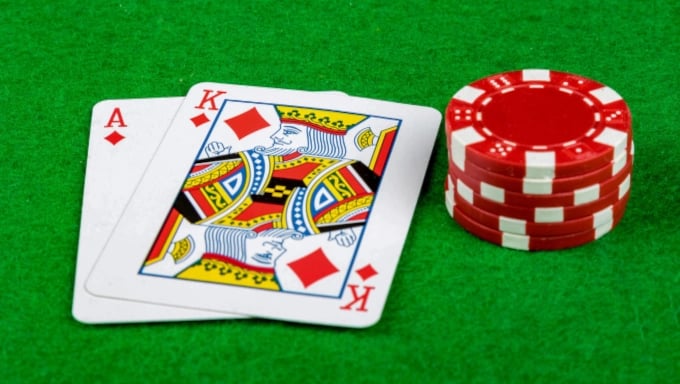
- Blackjack payout: a blackjack (ace + ten‑value) commonly pays 3:2 but some tables pay 6:5 or other ratios; reduced blackjack payout substantially increases the house edge.
- Reshuffle policy: continuous shuffling machines or automatic post‑hand reshuffle make card‑sequence‑dependent approaches irrelevant.
Because basic strategy depends on these parameters, do not apply a chart without first confirming how the game is configured. If a chart’s assumptions differ from the table rules, its recommended plays can be suboptimal.
Basic strategy: decisions, not a winning system
Basic strategy prescribes the decision with the lowest expected loss (or highest expected value) for a particular hand and dealer upcard under a given rule set. Typical decision categories are:
- Hit or stand: whether to take another card when the expected value favours one action.
- Double down: increasing the wager for exactly one additional card where the expectation improves.
- Split pairs: separating two equal cards into two hands where expected value supports splitting.
- Surrender: folding a hand to lose only part of the stake when available and mathematically preferable.
How to use basic strategy responsibly:
- Match the chart to the table rules (decks, dealer S17/D17, DAS, surrender, blackjack payout).
- Practice the chart with low stakes or simulated hands until decisions are automatic; the goal is consistency rather than exploiting short‑term variance.
- Combine strategy with pre‑set bankroll and time limits (see Budget, time limits and safer play) to reduce harm from variance.
Common misconceptions corrected:
- Basic strategy is not a guarantee of profit; it only provides the play with the best mathematical expectation under stated rules.
- RTP or expected return numbers published for a game refer to theoretical long‑run averages and not to any single session.
- Bonuses, RTP statements or progression betting systems do not change the underlying probabilities of individual hands in the short term.
Card counting: limits and online‑game realities
Card counting is a technique developed for advantage play in some physical‑table environments where cards are not immediately reshuffled and the deck composition can be estimated by tracking high and low cards. It is a mathematical method that may change bet size and playing decisions based on the remaining deck composition.
Important limitations and realities:
- Online RNG blackjack and games using continuous shuffling machines remove the practical basis for card counting because deck composition is effectively randomised between hands.
- Casinos and operators may enforce their terms if play is judged to involve advantage techniques; venues are within their rights to manage play according to their rules and applicable law.
- Card counting requires extensive practice, precise betting and a deep understanding of table rules; it also faces practical limits from minimum and maximum bets, dealer and floor observation, and table reshuffle policies.
Because online games vary in implementation, card counting is generally not effective on most remote RNG tables. In live venues where conditions permit tracking, outcomes are still probabilistic; counting can alter expected value but does not ensure session profits and it is not a way to avoid regulatory or operator controls.
Budget, time limits and safer play
Strategy tools are most useful when paired with robust money management and time controls. Use the following checklist as a starting point for safer, entertainment‑oriented play rather than as a method to chase losses.
Entertainment budget checklist
- Set an entertainment budget you can afford to lose; this should be separate from bills, savings and emergency funds.
- Decide a session stake limit and a maximum number of sessions per week or month.
- Use fixed bet sizes that fit the budget and avoid staking a growing proportion of remaining bankroll after wins or losses.
- Record outcomes and time spent to maintain awareness of finance and behaviour patterns.
Time and behaviour limits
- Set a session timer and stop when the timer expires, wins or losses aside.
- Take planned breaks every 30–60 minutes to maintain perspective.
- Avoid playing when under the influence of alcohol, strong emotions or financial pressure.
If you find it difficult to abide by limits, consider formal self‑exclusion options and support services listed in Sources and support below.
UKGC, GAMSTOP and support
GAMSTOP is a free self‑exclusion programme for people who want to exclude themselves from online gambling sites that are licensed to accept players in Great Britain. It operates independently of any one operator; details of how GAMSTOP works are available on the official GAMSTOP site.
Key regulatory points:
- GAMSTOP covers online gambling businesses licensed for Great Britain; using a non‑GAMSTOP or foreign‑licensed site is not the same as being regulated by the UK Gambling Commission. For information about the UK Gambling Commission’s public register and the scope of licences, consult the UKGC public register.
- The UKGC publishes research and guidance on the unlicensed market and risks to consumers; this material explains regulatory limits and how the Commission approaches unlicensed operators.
Official support and help lines for gambling harms include services such as GambleAware; if you are concerned about gambling behaviour, reach out to recognised support providers rather than attempting to self‑manage by switching venues.
Relevant official links:
- GAMSTOP — about
- UK Gambling Commission — public register
- UKGC research — unlicensed gambling
- GambleAware — get help now
For guidance on how gambling advertising and affiliate marketing should be presented, the Advertising Standards Authority provides advice relevant to publishers and affiliates.
Frequently asked questions
Can basic strategy guarantee that I win at blackjack?
No. Basic strategy selects the play with the best expected value under specified rules, which reduces the house edge in the long run but cannot guarantee wins in individual sessions or recover losses. Variance means outcomes are unpredictable over short horizons.
Why must a blackjack strategy chart match the table rules?
Different rules change probabilities and the optimal decisions. A chart made for single‑deck, dealer‑stands‑on‑soft‑17 and DAS allowed will produce different plays from a chart designed for six decks, dealer‑hits‑soft‑17 and no DAS. Using a mismatched chart can increase expected losses versus using the correct chart.
Is insurance a way to protect a blackjack hand?
Insurance is a separate side bet offered when the dealer shows an ace. It pays at fixed odds if the dealer has blackjack. For most players, insurance is a negative‑expectation bet and not routine protection. Whether it is ever correct depends on deck composition and the payout; in practical play, insurance should not be treated as standard protection without a clear, rule‑based reason.
Does card counting work in online blackjack?
On most online RNG tables and in games using continuous shuffling, card counting is not effective because deck composition is regularly randomised. Card counting was developed for in‑person games without frequent reshuffle; even there, practical constraints such as bet limits, floor observation and reshuffle policies limit its real‑world applicability. It is not a guaranteed path to profit.
What should I do if I am on GAMSTOP or worried about my gambling?
If you are on GAMSTOP or concerned about gambling behaviour, do not attempt to find alternative venues to continue gambling. Contact official support services such as GambleAware or use GAMSTOP and other local resources for confidential help. If you need immediate assistance, follow the links under Sources and support.
Sources and support
Official sources and further reading:
- GAMSTOP — about
- UK Gambling Commission — public register
- UKGC research on unlicensed gambling
- GambleAware — help now
- ASA guidance on affiliate marketing
Related articles on this site for further context:
- game-rules and basic-strategy context — a broader overview of blackjack variants and considerations when playing off GAMSTOP coverage.
- Tips To Win Roulette Not On Gamstop — rule‑focused advice for a different table game, useful for comparing volatility and house edge.
- red flags and licence-verification checklist — context on regulatory coverage and consumer protections.
If you are seeking professional support for gambling problems, contact a recognised organisation such as GambleAware or your local health service; the links above provide direct routes to trusted resources.