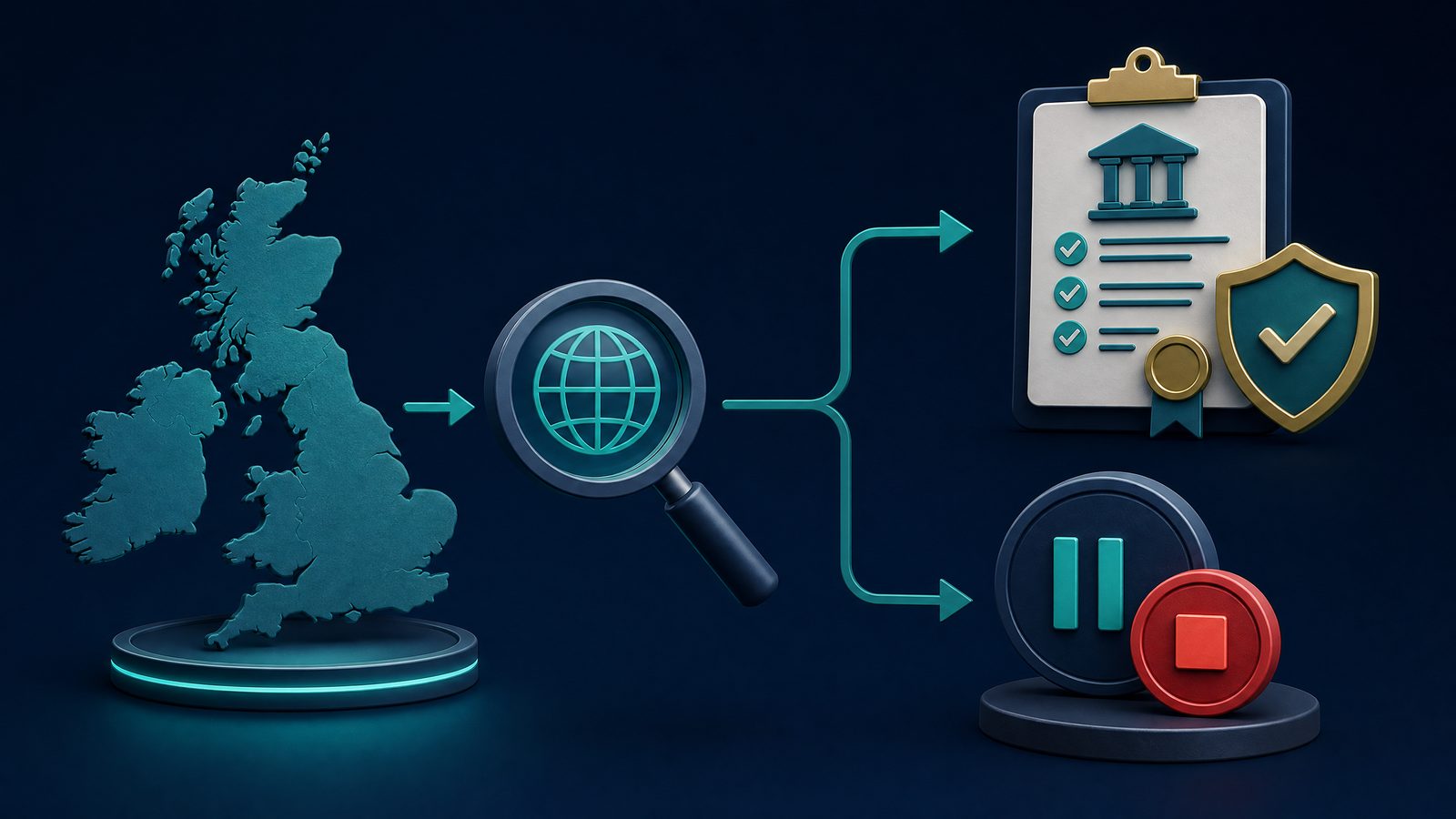










This evidence-led guide — this page explains what GAMSTOP is, how UK regulation applies to online gambling, and where to find confidential help. It does not advise anyone to bypass self-exclusion. GAMSTOP covers online gambling businesses licensed in Great Britain; being outside GAMSTOP or holding a foreign licence is not equivalent to UK Gambling Commission (UKGC) authorisation or UK consumer protection. People with an active self-exclusion or who are concerned about gambling harm should not use this page to find another place to gamble.
Advertising: this page may contain advertising links where we may earn a commission. Any commission does not change our evidence standards or the factual information presented here; see the ASA guidance on affiliate marketing for how advertising must be identified and handled (ASA: affiliate-marketing guidance).
If you are trying to get around GAMSTOP
Do not try to get around GAMSTOP. Attempting to circumvent a self-exclusion agreement — for example by creating new accounts, using another person’s account, or falsifying identity details — undermines the protections you put in place and can exacerbate gambling harm. The operators that participate in GAMSTOP agree to measures that stop registered customers from opening or accessing new accounts while an exclusion is active. The self-exclusion commitment is an important part of treatment and recovery for many people; using this page to find ways around it would be inappropriate and unsafe.
GAMSTOP and the UK Gambling Commission expect registrants to respect exclusions. The GAMSTOP service explains how self-exclusion works and the obligations registrants accept — see GAMSTOP’s official explanation for details (GAMSTOP: about). If you are feeling tempted during an exclusion, consider the practical steps below and reach out to confidential support services rather than searching for operators that lie outside GAMSTOP’s coverage.
What GAMSTOP is designed to do
GAMSTOP is a UK-based self-exclusion tool that allows an individual to register to be blocked from online gambling websites and apps that operate under Great Britain licences. It is intended as a protective measure: registering makes it harder to access regulated UK online gambling while the exclusion is active.
Important limits to understand: GAMSTOP applies only to online gambling businesses that have chosen to integrate with the scheme and that are licensed to operate in Great Britain. It does not regulate or block every website worldwide. Because GAMSTOP’s coverage is focused on the UK-regulated market, it should not be seen as a universal technical block against all gambling on the internet.
For people who use GAMSTOP, the scheme is intended to be a reliable component of a wider set of safeguards — including account closure, financial controls, and support from treatment services. GAMSTOP is not a clinical treatment; instead, it is a practical tool to reduce exposure and help people stick to recovery plans.
UKGC licensing and gambling in Great Britain
The UK Gambling Commission (UKGC) is the regulator for commercial gambling activity in Great Britain. A firm that holds a UKGC licence is legally required to meet consumer-protection standards set by the Commission; these include requirements on safer gambling measures, advertising, financial probity and complaints handling. You can check whether a business is licensed in the UK by consulting the UKGC public register (UKGC public register).
Operators that are licensed in other countries are not authorised by the UKGC to provide services under Great Britain rules. A foreign or offshore licence does not confer the same rights, consumer protections, complaint mechanisms or legal obligations as a UKGC licence. The UKGC has published research and statements about unlicensed gambling and related harms; for further reading see the regulator’s work on the unlicensed market (UKGC: unlicensed market research).
If a site claims to be subject to UK rules but does not appear on the public register, treat that claim with caution. You can also check an operator’s complaints history and whether they advertise changes in licence status. Operators that are not licensed in Great Britain will not be covered by UKGC dispute routes and may not be required to provide the same safe-gambling tools or affordability checks.
Practical steps to stop gambling online
If you want to reduce or stop online gambling, there are concrete, evidence-led steps you can take. These are intended to support recovery rather than to help continue gambling while excluded.
- Use and maintain formal self-exclusion: Register with GAMSTOP if you are eligible and want to stop access to UK-licensed operators for a fixed period. Follow up with the operator(s) where you previously had accounts to request closure of any active accounts and to ask them to flag any accounts to be blocked.
- Financial controls: Speak with your bank about gambling blocks on debit and credit cards. Banks and card providers can apply voluntary gambling transaction blocks or help you set spending limits.
- Remove saved payment details: Remove cards and payment details from sites and apps where possible, and consider closing accounts you do not plan to use again.
- Device-level controls: Use browser and app restrictions to limit access to gambling websites. Many smartphones have content- and app-restriction settings that can be combined with other controls.
- Accountability and planning: Create an action plan that identifies triggers and alternative activities. Share your plan with a trusted friend, family member or support worker if you feel able — but do not use another person’s account to gamble.
- Professional support: Combine technical and financial safeguards with counselling, therapy or support groups. A coordinated approach is usually more effective than any single measure.
These steps are practical harm-reduction measures. They are not exhaustive and may need to be adapted for personal circumstances. If you have active exclusion in place, the recommended response to urges or lapses is to contact treatment or support services rather than attempting to continue gambling elsewhere.
How to check a site’s licence and report concerns
Before interacting with any gambling service, confirm the regulatory status. Use the UK Gambling Commission public register to confirm whether a business is licensed to operate in Great Britain (check licences). A licence shown on a website should be verifiable on the public register; if you cannot find the business there, treat promotional statements about UK regulation as suspect.
If you suspect an operator is offering services to UK consumers without a UKGC licence, you can report it to the UKGC or consult its published research on the unlicensed market for context (UKGC unlicensed-market research). Reporting unlicensed activity helps regulators prioritise enforcement and can lead to consumer alerts or other actions.
When evaluating any gambling-related website, consider these checks: verify the operator name against the UKGC register, read a site’s terms and conditions carefully, check for transparent complaints and payout procedures, and look for independent publication of audit or fairness statements. Do not rely on marketplace branding or claims alone; check the primary regulatory sources.
Free confidential support
If gambling is causing harm, confidential help is available. Organisations provide counselling, helplines and online resources free of charge. Some of the principal UK services include:
- GambleAware — information, self-assessment tools and links to treatment services. See GambleAware: get help now.
- GAMSTOP — the self-exclusion service that blocks access to participating UK-licensed online gambling sites for a chosen period. Details at GAMSTOP: about.
- NHS and local mental health services — can provide assessment, referrals and treatment options including counselling and cognitive behavioural approaches.
Contact details and helplines are available from these organisations. If you are in immediate distress or at risk of self-harm, contact emergency services or a crisis line in your area. These services are confidential and exist to help people make a safe plan to reduce gambling harm.
Context and limitations of non-UK licences
Some websites operate under licences from jurisdictions outside Great Britain. That regulatory status does not automatically mean they meet the same legal or consumer-protection standards as UKGC-licensed firms. Differences can include dispute-resolution processes, advertising standards, available safer gambling tools and the enforceability of consumer rights. The fact that a business is regulated elsewhere is not the same as being regulated in Great Britain.
If you are considering reading more about markets or specific betting content, be aware of the distinction between factual information and promotion. The site contains informational pages that discuss various topics; these should be read with an understanding of the regulatory distinctions described above. For related reading within this site — which may discuss non-GAMSTOP markets — see pages such as Football Betting Not On Gamstop, Tennis Betting Not On Gamstop and Betting At Non-Gamstop Casinos Made Easy. These internal pages provide topical information but do not replace regulated consumer advice or clinical support.
Checklist: a safe approach if you want to stop gambling
- Register with GAMSTOP if you want to block access to UK-licensed online sites.
- Ask your bank about gambling transaction blocks or card controls.
- Close or suspend gambling accounts you no longer wish to use and remove stored payment methods.
- Set device-level restrictions and remove gambling-related apps where possible.
- Develop an immediate coping plan and identify trusted contacts for support.
- Contact GambleAware or local NHS services for assessment and referral to treatment.
- Report suspected unlicensed operators to the UKGC so regulators can take appropriate action.
Frequently Asked Questions
Can I use another person’s gambling account while self-excluded?
No. Using another person’s account to gamble while you are self-excluded undermines the purpose of the exclusion and is inconsistent with the commitments registrants make. Account sharing also raises legal and financial risks for both parties and can make it harder to access effective support. If you are tempted to do this, contact a support service instead and strengthen your safeguards.
Does a foreign licence make a bookmaker UKGC-licensed?
No. A licence issued by a jurisdiction outside Great Britain does not make an operator UKGC-licensed. UKGC licensing is a specific regulatory authorisation that appears on the Commission’s public register. Operators regulated elsewhere may have different obligations and protections; always verify a claim of UK regulation by checking the UKGC public register (UKGC public register).
What can I do if I want to gamble during a GAMSTOP exclusion?
If you are under a GAMSTOP exclusion and feel the urge to gamble, the safest course is to use the support and harm-reduction measures available: contact a counselling service, speak to a support worker, apply additional financial blocks, and remove access to gambling sites and apps. Attempting to open new accounts or to use non-GAMSTOP services to continue gambling is not recommended and can worsen harms. Confidential support organisations such as GambleAware can help you manage urges and find treatment options (GambleAware).
Who can I contact for confidential help?
Free and confidential help is available from charitable and health services. GambleAware offers advice and self-assessment tools and can help you find local treatment providers (GambleAware). GAMSTOP provides information on self-exclusion (GAMSTOP). Your GP or local NHS mental-health services can provide assessment and refer you to counselling or therapy.
If you are in immediate crisis, contact emergency services or a local crisis line. Reaching out is a positive first step; confidential services exist to help people regain control and reduce harm.
Additional reading on this website includes focused topics on specific sports markets and non-GAMSTOP discussions; where these pages are linked above, they are provided for information only and should not be used to try to evade self-exclusion or regulatory protections.