









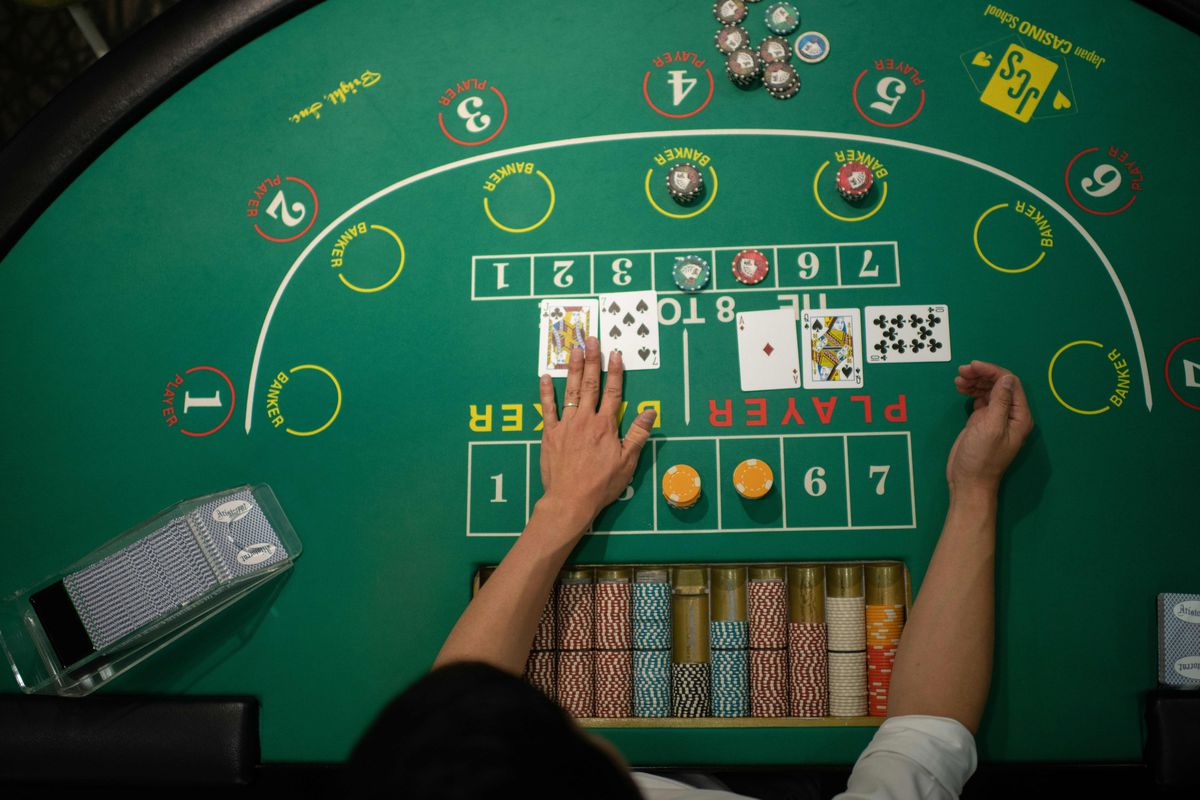
This page is a concise, evidence-focused guide to the rules and mathematics behind modern baccarat play, emphasising how fixed drawing rules determine outcomes in the common punto banco format. This page does not advise anyone to bypass self‑exclusion. GAMSTOP covers online gambling businesses that are licensed to operate in Great Britain; being outside GAMSTOP or holding a foreign licence is not equivalent to UK Gambling Commission (UKGC) authorisation or to UK consumer protections. If you have an active self‑exclusion or gambling‑related concerns, do not use this page to find another place to gamble.
What baccarat is and what this guide covers
This guide explains the mechanics of baccarat—primarily punto banco—focusing on the standard, rule‑based card draws used in most live and electronic tables. It covers card values, what constitutes a natural hand, the automatic third‑card drawing rules that remove discretionary play in punto banco, and clear, dated estimates for common payouts and house‑edge figures under a typical ruleset. It also summarises main game variations, notes how table rules change odds, and provides a practical checklist for reading table terms and verifying licences.
Casino comparison
18+. This comparison contains commercial links. Terms, availability and regulatory status can change; check current operator information before taking action.
If you are self-excluded or gambling is causing harm, do not use this page to seek alternatives. Consider independent support from GamCare.
| Logo | Casino | Visit |
|---|---|---|
 | Winner Casino | Visit Casino |
 | MyStake | Visit Casino |
 | NX7 Bets | Visit Casino |
 | ZizoBet | Visit Casino |
 | Golden Bet | Visit Casino |
 | LuckyCove | Visit Casino |
 | Aphrodite Casino | Visit Casino |
 | Dracula Casino | Visit Casino |
 | Gambiva Casino | Visit Casino |
 | Smash Casino | Visit Casino |
 | Rivo Casino | Visit Casino |
 | Slots Charm | Visit Casino |
 | Scarabs Win | Visit Casino |
 | Raptor Spins | Visit Casino |
 | Jimmy Winner Casino | Visit Casino |
 | Lucky Barry | Visit Casino |
 | Rabbit Win Casino | Visit Casino |
 | MaxiSpin | Visit Casino |
Advertising and affiliate disclosure
This page includes links to external and internal content that may be commercial. Where a link is advertising, it will be labelled accordingly; we may earn a commission if you click an advertising link and subsequently make a purchase or registration. Any commission does not change the evidence standard applied on this page. We do not recommend trying to avoid self‑exclusion or regulatory checks; the information below is for education about rules and risks.
How punto banco works
Punto banco is the most widely played baccarat variant in casinos worldwide. It is a house‑banked game in which the casino (or software) follows a fixed set of drawing rules to resolve two competing hands: the Player (punto) and the Banker (banco). Participants place bets on which hand will have the higher point total after the drawing sequence, or on a Tie. There is no decision‑making about draws by individual punters in punto banco: the third‑card rules are automatic and public.
Sequence of play (typical punto banco)
- Bets are placed on Player, Banker or Tie.
- The dealer deals two cards to the Player hand and two cards to the Banker hand, usually from a shoe containing multiple decks (commonly 6 or 8 decks).
- Card values are summed and reduced modulo 10 (only the units digit counts).
- If either initial two‑card total is 8 or 9 this is a “natural” and no further cards are drawn (unless house rules specify otherwise); the higher total wins immediately or a tie is declared.
- If no natural occurs, automatic third‑card rules are applied in a defined order (Player rules first, then Banker rules possibly depending on the Player’s third card).
- Payouts are resolved according to the table rules (commissions on Banker bets are common).
Card values
| Card | Value |
|---|---|
| Ace | 1 |
| 2–9 | Face value (2→9) |
| 10, J, Q, K | 0 |
How totals work and naturals
Totals are calculated by adding card values then removing tens. For example, 7 + 8 = 15 → total 5. An initial two‑card total of 8 or 9 is called a “natural.” Under standard punto banco rules, any natural on either side ends the hand immediately and the higher natural or tie stands.
Automatic third‑card drawing rules (standard punto banco)
Below is a concise summary of the common automatic third‑card rules used to determine whether the Player and Banker receive a third card. These rules are deterministic; neither punters nor house staff exercise discretionary choice when these rules are applied.
- If the Player’s two‑card total is 0–5, the Player draws a third card. If it is 6 or 7, the Player stands.
- If the Player stands (total 6 or 7), the Banker draws on 0–5 and stands on 6–7.
- If the Player draws a third card, the Banker’s action depends on its own total and the Player’s third card value according to a fixed matrix. A common variant of the matrix (used by many casinos) is:
| Banker total | Banker action if Player drew a third card with value |
|---|---|
| 0–2 | Banker draws (regardless of Player third card) |
| 3 | Banker draws unless Player third card was 8 |
| 4 | Banker draws if Player third card was 2–7 |
| 5 | Banker draws if Player third card was 4–7 |
| 6 | Banker draws if Player third card was 6–7 |
| 7 | Banker stands |
Note: Some operators publish the full matrix and any table‑specific exceptions in their rules. Always check the specific table rules where you play; the exact third‑card matrix is part of the game’s deterministic structure.
Example hand (illustrative)
Player receives 4 + 3 = 7 (Player stands). Banker receives 5 + 1 = 6. With Player standing on 7 and Banker on 6, no third cards are drawn and Player wins 7 vs 6. This example illustrates how totals and standing rules remove discretionary choices in punto banco.
Comparing payouts and house edge
Table rules (deck count, Banker commission, tie payout, side bets) determine the long‑run expected returns. The figures below are approximate long‑run house‑edge estimates under a commonly used, dated punto banco ruleset: 8 decks, 5% commission on Banker wins, and a Tie payout of 8:1. These estimates are provided as educational figures and will vary with alternate commission rates, tie payouts, deck counts and side‑bet rules.
| Bet | Typical payout | Approximate house edge (8‑deck, 5% Banker commission, tie 8:1) |
|---|---|---|
| Banker | 1:1 minus commission (commonly 5%) | ~1.06% |
| Player | 1:1 | ~1.24% |
| Tie | 8:1 (common) | ~14.36% |
These house‑edge numbers are long‑run theoretical expectations for the given ruleset (commonly cited in gaming mathematics literature). They do not predict short‑term outcomes: any single hand can win or lose irrespective of these averages. Different tables will use other commission structures (for example reduced commission or a set fee on high Banker wins) and may pay ties at 9:1; such changes materially alter the house edge for those bets.
Commission mechanics: the 5% Banker commission is the most usual way casinos maintain balance on the Banker bet’s higher win probability. Some games offer a reduced commission or alternative no‑commission formats that alter payouts on specific Banker outcomes. When a no‑commission table exists, it typically modifies the payout for certain Banker wins (for example, large Banker wins paying reduced odds) rather than removing the house margin entirely.
Tie‑bet risk: tie bets can carry a comparatively very large house edge because ties are relatively rare while the payout multipliers often offered are insufficient to make the bet fair. Because the tie house edge is high under common payouts, most probability‑aware players view the Tie as a high‑risk side bet rather than a value play.
Variations: punto banco, chemin de fer and live tables
Baccarat has several historical and regional variants. The variant chosen affects whether players make drawing decisions and alters the game’s social dynamics and odds.
Punto banco (fixed rules)
Punto banco is the casino‑banked, fixed‑rule variant described above and is the dominant form at most large casinos and live dealer streams. Draws are automatic, and players only choose bets prior to each hand.
Chemin de Fer
Chemin de Fer is a player‑banked, traditional French variant in which players can have the banker role rotate and may be allowed to make certain drawing decisions. Because player decisions reintroduce skillful or strategic choices, chemin de fer differs materially from punto banco. Rules and etiquette vary between venues and are generally documented in table rules where the game is offered.
Mini‑Baccarat and live dealer tables
Mini‑Baccarat uses a similar rule set to punto banco but is played on a smaller table with faster rounds and often lower minimum bets. Live dealer tables reproduce punto banco dealing and rules on a stream with a human dealer; the same drawing matrix and commission rules commonly apply. If you are evaluating live play, check whether the table is labelled as punto banco and whether the operator publishes the deck count, commission and tie payout.
Other variants (EZ Baccarat, Baccarat Banque)
EZ Baccarat and Baccarat Banque are other variants that change specific outcomes or payouts; for example, some EZ Baccarat tables alter the treatment of certain Banker wins to remove a straight 5% commission, replacing it with a different payout rule. Specific variant rules materially alter house edge calculations; always consult the table rules for precise numbers and note whether any claimed payout or rule was independently verified by the operator.
For live‑streamed or proprietary variants, consult a table’s published rules or the operator’s help pages before wagering. Our pages on related topics—such as Live Baccarat Not On Gamstop (internal) and Tips To Win Baccarat Not On Gamstop (internal)—explain variant labels and common rule differences; these are for informational purposes and do not replace table‑specific rules.
A practical rules-and-terms checklist
Before placing a bet at any baccarat table or online game, check the following items. This checklist helps you read the table terms and understand how rules change risks and payouts.
- Deck count: confirm how many decks are used (6 or 8 decks are common). Deck count affects exact probabilities slightly.
- Banker commission: note the percentage or the specific commission rule (e.g., 5% standard, reduced commission, or modified payout on certain Banker wins).
- Tie payout: check whether a Tie pays 8:1, 9:1 or a different multiple; this changes the Tie house edge greatly.
- Side bets and bonus bets: side bets usually increase house margin and have separate rules; treat them as independent propositions with their own odds.
- Shuffle method and penetration: in live or physical games, shuffling frequency and shoe penetration can change card distribution patterns; these are procedural, not a source of legal advantage.
- RNG vs live dealer: verify whether the table is an RNG game or uses a live dealer; rules are generally the same, but interface and pacing differ.
- Minimum and maximum bets: confirm limits to ensure you play within your budget and the table is appropriate for your bankroll.
- Licence and regulator: check whether the operator is licensed where you are entitled to consumer protections; for operators claiming a UK licence, consult the UK Gambling Commission public register (UKGC public register).
- Responsible gambling tools: ensure the operator publishes and supports self‑exclusion, deposit limits and contact pathways for help.
UKGC, GAMSTOP and player protection
GAMSTOP is a UK‑based self‑exclusion service that enables people to exclude themselves from online gambling provided by operators licensed to operate in Great Britain. GAMSTOP’s own explanation of the service is available at their site (About GAMSTOP). If an operator is not part of GAMSTOP or is licensed outside Great Britain, that operator is not covered by GAMSTOP registration; similarly, a foreign licence does not equal UKGC authorisation.
To verify whether an online operator holds a UK licence you can consult the UK Gambling Commission public register (UKGC public register). The UKGC publishes guidance and enforcement information about licensing and consumer protection; it also conducts research into unlicensed gambling activity (unlicensed market research).
If gambling is causing you harm, confidential help and support are available. In Great Britain, GambleAware provides information and signposting to local support and treatment services (GambleAware support). If you have self‑excluded via GAMSTOP, do not try to bypass that exclusion; instead contact GAMSTOP or local support services for advice on next steps.
Sources and support
Official sources referenced for regulatory and support information include GAMSTOP and the UK Gambling Commission. For help with problematic gambling, see GambleAware. For advertising and affiliate guidance relevant to online content, the Advertising Standards Authority provides materials on affiliate marketing and gambling advertising (ASA affiliate guidance) and the CAP rules on gambling advertising (ASA/CAP gambling rules).
Internal resources on this site for additional reading include a page on Live Baccarat Not On Gamstop, a piece collecting commonly discussed tactics in Tips To Win Baccarat Not On Gamstop, and further gambling‑format comparisons such as Poker Not On Gamstop. These internal pages are informational summaries and do not replace checking individual table rules or regulatory status.
Frequently asked questions
What is the difference between the Player, Banker and Tie bets in baccarat?
The Player and Banker bets are wagers on which of the two hands will finish with a higher point total after the automatic drawing sequence. Under ponto banco rules these are resolved by fixed drawing rules; the Banker bet historically wins slightly more often, which is why many tables apply a commission on Banker wins. The Tie bet wagers that the two hands will have equal totals and usually pays a higher multiple (for example 8:1), but ties are relatively uncommon and the effective house edge on the Tie is typically much larger than on Player or Banker bets under common payout schemes.
Are baccarat drawing decisions made by the player?
Not in punto banco. In the common punto banco variant, all drawing decisions are automatic and follow a published matrix; neither the person betting on Player nor the person staking on Banker makes the draw calls. In other variants—such as chemin de fer—players may be involved in drawing decisions, which changes the social and strategic character of the game.
Why do baccarat payouts and house edge vary by table?
Small rule differences change mathematical expectations. Key variables include the number of decks, the commission structure on Banker bets (for example a straight 5% commission vs a modified fee), the Tie payout (8:1 vs 9:1 or specialised rules), and the availability of side bets with separate pay tables. Because these rule changes alter the probabilities and payoffs, they change long‑run house‑edge estimates. Always read the table rules and any published pay tables before wagering.
Does GAMSTOP apply to every gambling website?
No. GAMSTOP covers online gambling services that are licensed to operate in Great Britain and that have chosen to participate in the GAMSTOP scheme. An operator being outside GAMSTOP or licensed in another jurisdiction is not the same as being licensed by the UKGC. If you rely on GAMSTOP protections, confirm an operator’s status rather than assuming coverage.
Where can I get help if I have self-excluded or gambling is causing harm?
If you are in Great Britain and need help, GambleAware provides confidential support and referral services (GambleAware support). If you have used GAMSTOP to self‑exclude and are tempted to reverse that decision, contact GAMSTOP for guidance and seek local treatment resources. For concerns about operator conduct or licensing, consult the UK Gambling Commission public register (UKGC public register) and the Commission’s published research on unlicensed activity for context.