









This evidence-led guide — this page explains research-informed concerns about how playing online slots on sites outside the GAMSTOP self-exclusion scheme can affect some people’s wellbeing. It does not advise anyone to bypass self-exclusion. GAMSTOP covers online gambling businesses licensed to operate in Great Britain; being outside GAMSTOP or holding a foreign licence is not equivalent to UK Gambling Commission (UKGC) authorisation or to the consumer protections that apply to GB-licenced services. If you currently have an active self-exclusion or you are worried about gambling-related harm, do not use this page to find another place to gamble. Instead follow the practical support steps below and contact specialist services.
Immediate help and practical steps
- GAMSTOP: use self-exclusion for GB-licensed online gambling services — see GAMSTOP – About.
- Helplines: GamCare / National Gambling Helpline — 0808 8020 133 (confidential support and information).
- GambleAware advice and treatment options: GambleAware – Get help now.
- If you want to reduce access from devices or payment methods, consider proven blocking tools and speak to your bank about gambling transaction controls. If you are unsure how to proceed, contact a local support service or your GP for a confidential conversation.
Advertising disclosure: some pages on this site may contain advertising or affiliate links. Where advertising is present, the site may earn a commission if you click or sign up. This disclosure does not change the standard of evidence, the clinical or regulatory information presented here, or the impartiality of the safety guidance. This article is intended as consumer-facing harm-prevention information, not as encouragement to gamble.
What gambling-related harm can look like
Gambling-related harm is a broad term used by public health organisations to describe a range of negative outcomes that can follow from problematic gambling behaviour. These harms can affect emotional wellbeing, relationships, finances, work or study, and physical health. Evidence summaries from UK support organisations and public health bodies describe common patterns that may emerge for some people:
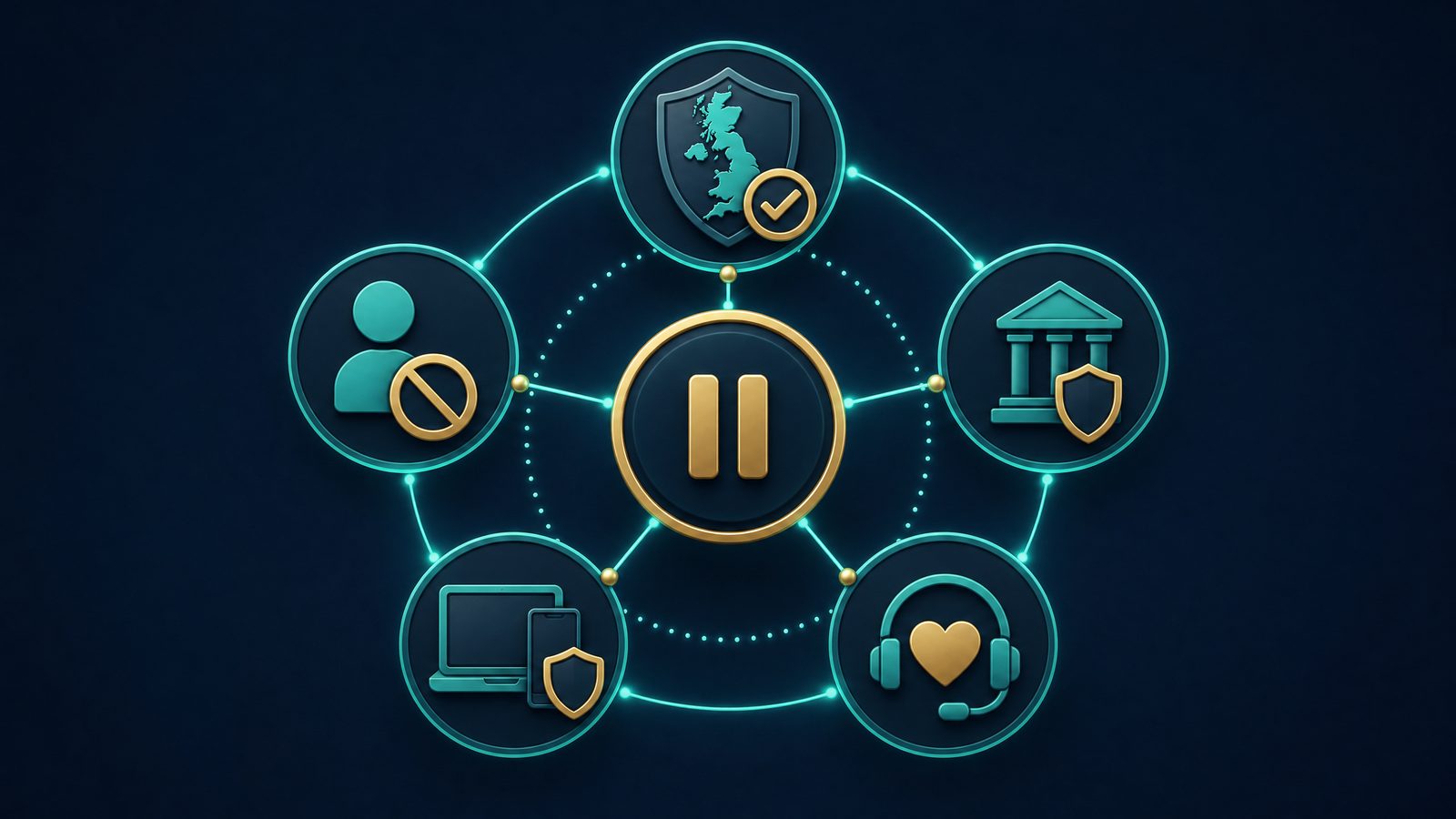
- Emotional distress: increasing anxiety, low mood, feelings of shame or guilt related to losses or secrecy.
- Preoccupation: intrusive thoughts about gambling, planning sessions, or difficulty concentrating on other tasks.
- Financial harm: unplanned spending, depletion of savings, missed payments, or borrowing to fund gambling.
- Relationship strain: arguments, withdrawal from family or friends, and reductions in social activities.
- Functional impacts: missed work or study, sleep disturbance, or decreased self-care.
These effects can vary in severity and time course. For some people, harms are episodic and limited; for others they accumulate and require specialist support. National organisations such as GambleAware and NHS services provide guidance and treatment pathways for people experiencing these harms. See the citations at the end of this article for links to official resources.
Why online slots can be difficult to step away from
Online slots present a combination of features that can increase engagement. This does not mean every player will experience harm, but it helps explain why some people report difficulty stopping once they start.
Key characteristics that can increase short-term engagement include quick event frequency (many outcomes per hour), sensory stimuli (sound and animation), and immediate feedback after each bet. Rapid sequences of wins and losses can create a compelling cycle of behaviour in which the next spin feels immediately relevant, which in turn can reduce the time a person spends reflecting on their activity.
Intermittent reinforcement — the pattern of occasional rewards among many unrewarded events — is a well-established behavioural principle that increases repeated responding. Slot games often implement features (small frequent wins, bonus rounds, and near-miss displays) that can create intermittent reward patterns. Research and regulatory reviews describe how such features can increase play intensity for some players.
Other factors that affect how hard it is to step away include the player’s personal circumstances (stress, financial pressure, previous gambling problems), accessibility of the service (24/7 availability), and how payment methods are integrated into the session. The combination of personal vulnerability plus game and platform features can raise the likelihood of harmful patterns developing for some individuals.
Regulators and clinicians emphasise that game features alone do not determine outcomes. Individual differences in impulsivity, coping strategies, and social supports strongly influence whether a person experiences harm. This article uses cautious, non-diagnostic language because only a qualified clinician can assess clinical harm.
How game features can influence behaviour (what the research says)
Academic and regulatory reviews examine multiple aspects of game design and platform practice. The UK Gambling Commission has published work on unlicensed markets and the online environment, which helps contextualise concerns about services operating outside GB licencing and GAMSTOP coverage (Gambling Commission: unlicensed gambling research).
Examples of features discussed in peer-reviewed and regulatory literature include:
- Event frequency — more outcomes per unit time can increase opportunities to place bets, which can accelerate losses and reduce reflection time.
- Autoplay and fast play options — these can decrease the interval between decisions, making it easier to play many rounds quickly.
- Near-misses — outcomes that appear close to a win can prolong play even though they are losses.
- Reward schedules — a mix of small frequent payouts and rare large payouts creates intermittent reinforcement.
Regulatory reviews vary in scope and method; they typically conclude that platform and game features can increase engagement and that operators should implement safer-play design and consumer protections. However, features that increase engagement are not, on their own, proof that a game will cause addiction. Contextual factors and individual vulnerability are central.
Warning signs to take seriously
Early recognition of warning signs can allow timely action. No single sign proves a problem exists, but combinations of the following patterns are commonly reported by clinicians and support organisations:
- Spending more time or money than intended; repeated attempts to cut down that fail.
- Chasing losses: continuing to gamble in an effort to recover prior losses.
- Hiding gambling activity from friends or family, or lying about it.
- Using gambling to escape from stress, anxiety, or low mood.
- Financial strain: borrowing, missed bills, or using essentials to gamble.
- Relationship problems linked to gambling behaviour.
- Preoccupation and neglect of other activities, or increasing irritability when not gambling.
If several of these signs are present and persistent, consider seeking confidential help from a specialist service (see help panel above). A GP can also discuss mental health and refer to local services where appropriate. If you are concerned about immediate financial harm, speak to a debt advice service as early as possible.
GAMSTOP’s role and limits
GAMSTOP is a free self-exclusion service that can bar users from participating sites and apps that are signed up to the scheme. It is intended to be a practical tool for people who want to stop using licensed online gambling services in Great Britain. Details of the scheme and how it works are available from GAMSTOP’s official information page (GAMSTOP – About).
Important limits to be aware of:
- GAMSTOP covers online gambling businesses that are licenced in Great Britain and participate in the scheme. It does not automatically cover offshore or unlicensed operators that are not authorised to provide services to GB consumers.
- Self-exclusion through GAMSTOP does not block land-based gambling venues, lotteries, or non-participating services.
- If an individual accesses gambling on services that are not part of GAMSTOP while excluded, this is not a fault of the self-exclusion process itself but a sign that a consumer protection gap exists for that specific service. Attempting to bypass self-exclusion is not advised; instead, use the practical steps and support services in this article.
For information on which businesses are registered with the UK regulator, consult the UK Gambling Commission public register (Gambling Commission – public register).
What to do today: immediate and practical steps
If you are concerned about your own gambling, the following practical steps can reduce short-term harm and help you access support. These are harm-minimisation approaches used by clinicians and specialist services; they are not treatment manuals but basic, evidence-aligned actions.
- Pause and add friction: consider logging out of gambling sites and removing saved payment methods from devices where possible. If you are unsure about doing this, ask a trusted friend or a support worker to help you add friction to your access.
- Use self-exclusion and blocking tools: register with GAMSTOP if you are eligible, and consider device-level blockers such as Gamban or other reputable blocking products (these are designed to reduce access, not to be bypassed). Discuss bank gambling controls with your card provider to restrict gambling payments.
- Contact specialist support: call the National Gambling Helpline (GamCare) at 0808 8020 133 or use GambleAware’s referral information to find local treatment options (GambleAware – Get help now).
- Talk to someone you trust or a health professional: a confidential conversation with a GP can cover mental health concerns and debt impacts and lead to referrals.
- Address financial risks: contact your bank for gambling-blocking options, seek debt advice early, and consider having a trusted person help manage finances temporarily if you are at risk of significant loss.
- Plan alternative activities: reduce isolation by scheduling structured activities, exercise, or social contact to replace gambling sessions and reduce triggers.
These are practical, immediate responses. If you are in crisis or at risk of self-harm, please contact local emergency services or a crisis line in your area without delay.
Support for friends and family
Family members and close friends often want to help but may not know the most effective approach. Evidence-based guidance emphasises supportive, non-judgmental communication and boundary-setting:
- Open a conversation from concern rather than accusation. Use specific examples of changes you have noticed and how they affect you and the person you care about.
- Encourage confidential support from specialist services such as GamCare or GambleAware and offer practical help to contact them if the person agrees.
- Set and maintain clear boundaries about money and shared finances. Where necessary, seek independent debt advice and consider temporary financial safeguards to protect shared assets.
- Take care of your own wellbeing. Supporting someone with gambling harm can be stressful; access family support services and, if needed, your own mental health care.
There are specific support services for affected others; check the national helplines and local treatment providers for family-focused support and counselling options.
Practical pause-and-support actions organisations and informal carers can adopt
Local organisations, employers, and informal carers can take targeted actions to reduce harm and support a person seeking help:
- Provide clear signposting to confidential support lines (GamCare, GambleAware) and information about GAMSTOP.
- Offer flexibility at work or study to allow attendance at appointments or therapy sessions without stigma.
- Ensure internal policies allow staff to request gambling-blocks on workplace devices and networks.
- Facilitate access to financial and legal advice for those whose gambling has led to debt or potential insolvency.
Service providers should follow UK advertising and consumer rules when communicating about gambling and support, including the Advertising Standards Authority guidance for gambling-related promotions (ASA/CAP gambling rules).
How to evaluate online information and claims
When reading about gambling products or services, treat marketing claims with caution. Useful evaluation steps include:
- Check whether the operator is on the UK Gambling Commission public register if you are in Great Britain (Gambling Commission – public register).
- Be wary of advertising that downplays risk or suggests guarantees of winning.
- Prefer independent support and clinical sources when seeking information about harms or treatment.
If a site claims compliance or safety features, look for verifiable regulatory details rather than marketing statements. Claims such as “provably fair” or “guaranteed fairness” are not substitutes for regulatory oversight and do not speak to personal risk of harm.
Further reading on non-GAMSTOP services (informational)
The presence of sites outside GAMSTOP’s coverage is a known issue in the online market. For context, the UK Gambling Commission has examined unlicensed provision and methods for estimating the scale of unlicensed operators; this work helps explain why some UK consumers encounter sites that are not within the national self-exclusion scheme (Gambling Commission research on unlicensed gambling).
If you want to read other articles on related topics on this site (for information only, not as recommendations), see:
- Non Gamstop Slots with High RTP — Best Payout Slots for UK Players 2026 (informational).
- Top 10 Non GamStop Casinos for UK Players in 2026 (informational overview).
- Strategies When Playing Gambling In Non Gamstop Casinos (general information about safer-play approaches).
Author and reviewer information
Author: Senior editorial writer specialising in gambling harm, public health communications and UK regulatory guidance. The author has experience summarising peer-reviewed evidence for a consumer audience and collaborates with clinicians and statutory services when preparing educational content.
Reviewer: Independent clinical reviewer (specialist in addiction psychology) — reviewed for factual accuracy and alignment with UK public health guidance. This reviewer is not an endorsement of any commercial provider.
Article reviewed: 05 September 2026.
Sources and citations
- GAMSTOP – About (official information about the national self-exclusion scheme).
- Gambling Commission – Unlicensed gambling research (context on offshore and unlicensed markets).
- Gambling Commission – public register (check operator licensing status).
- ASA/CAP gambling rules (advertising and promotional standards).
- GambleAware – Get help now (treatment and support pathways).
Frequently Asked Questions
Can gambling affect mental health and finances?
Yes. For some people, gambling can be associated with increased anxiety, low mood, and financial problems. The relationship is not uniform: while many people gamble recreationally without significant harm, others experience distress and financial loss that negatively affect their mental health, relationships and daily functioning. If you notice persistent changes in mood, sleep, concentration, or mounting debts linked to gambling, seek confidential help from a GP or specialist service such as the National Gambling Helpline (GamCare) or GambleAware referral services.
What are signs that gambling may be causing harm?
Signs that deserve attention include spending more time or money than intended, repeated failed attempts to stop, hiding gambling from others, borrowing to fund gambling, and using gambling to cope with negative feelings. A combination of several signs over time suggests the need for assessment by a health professional or an addiction specialist. Early contact with support services and debt advisers can reduce the chance of harms escalating.
Does GAMSTOP stop all forms of gambling?
No. GAMSTOP is a self-exclusion service that applies to online gambling businesses that are licenced in Great Britain and that participate in the scheme. It does not cover land-based gambling, lotteries outside the scheme, or operators that are not licenced to offer services to GB consumers. If you are concerned that you can still access gambling while self-excluded, do not attempt to bypass the scheme. Instead, contact support services listed above and speak to your bank about payment controls.
Where can I speak to someone confidentially?
Contact the National Gambling Helpline (GamCare) on 0808 8020 133 for confidential advice and signposting. GambleAware also maintains referral information to local treatment providers (GambleAware – Get help now). If you are in immediate danger or at risk of self-harm, contact local emergency services or a crisis line in your area.
If I am self-excluded, should I try another site?
No. Attempting to find other sites or services in order to continue gambling defeats the purpose of self-exclusion and can increase harm. If your self-exclusion is not preventing access due to the presence of unlicensed operators, report concerns to the UK Gambling Commission and contact support services for alternatives to gambling-based coping strategies. If you are unsure how to proceed, a confidential call to a helpline can help you plan next steps.
How can I help a loved one who is gambling harmfully?
Begin with a non-confrontational conversation, offer support in contacting specialist services, and set healthy boundaries around finances and shared responsibilities. Encourage professional help and self-exclusion where appropriate, and take care of your own emotional needs by accessing support for affected others.
Review and editorial note
This article was produced to provide evidence-led, consumer-focused information about gambling-related harm associated with online slots accessed outside GAMSTOP coverage. It does not recommend any gambling sites or provide instructions on how to access services in violation of self-exclusion. The content was prepared by editorial staff with specialist reviewer input and reflects UK regulatory and public health guidance as of the review date.